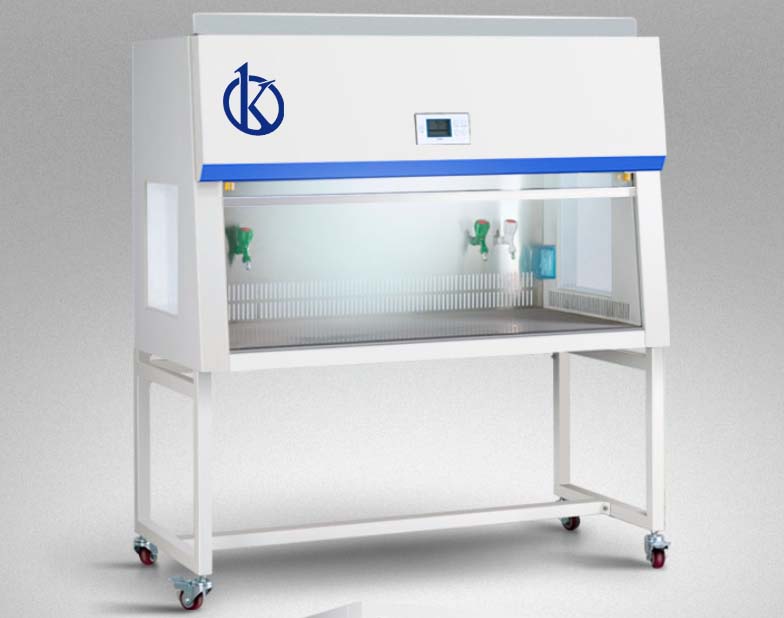
How Can Vertical Laminar Flow Clean Benches Enhance University Research Projects?
Vertical laminar flow clean benches play a critical role in academic research by providing a controlled environment for experiments. These benches offer protection against airborne contaminants, ensuring that sensitive materials and samples are handled under optimal conditions. In this article, we will explore various models of vertical laminar flow clean benches and their specific applications in university research and academic projects.
The Importance of Clean Benches in Research Settings
In university research, maintaining a sterile environment is essential for obtaining accurate and reproducible results. Vertical laminar flow clean benches create a consistent airflow that directs contaminants away from the workspace. This feature is particularly important in fields such as microbiology, molecular biology, and materials science where even minor contamination can result in significant setbacks. Each model has been designed with various specifications to meet the diverse needs of academic researchers.
Comparison of Available Models
| Model | Classification | Airflow Velocity | Noise Level | Price (USD) | Best For |
|---|---|---|---|---|---|
| YR05267-1 | ISO Class 5 | 0.3~0.6 m/s | ≤62 dB | 1600.00 | Biotechnology research |
| YR05734 | Class 100 | 0.25~0.45 m/s | ≤62 dB | 240.00 | Health engineering studies |
| YR05735 | Class 100 | 0.25~0.45 m/s | ≤62 dB | 300.00 | Biological experiments |
| YR05736 | Class 100 | 0.25~0.45 m/s | ≤62 dB | 420.00 | Microbial studies |
| YR05737 | Class 100 | 0.25~0.45 m/s | ≤62 dB | 650.00 | Precision instrument handling |
| YR05738 | Class 100 | 0.25~0.45 m/s | ≤62 dB | 590.00 | Chemical experiments |
Specific Applications of Vertical Laminar Flow Clean Benches in Academic Research
Vertical laminar flow clean benches are versatile tools utilized across various academic disciplines. In microbiology labs, they help researchers cultivate microorganisms in sterile conditions, which is crucial for accurate experiments. In chemistry departments, these benches provide an uncontaminated environment for chemical reactions and sample preparations. Furthermore, in engineering research, they are essential for handling sensitive electronic components that require protection from dust and airborne particles.
Common Mistakes and How to Avoid Them
When using vertical laminar flow clean benches, researchers often make mistakes that can compromise experiment integrity. One common error is neglecting to properly clean the surfaces before and after use, which can lead to contamination. Additionally, failing to adjust the airflow settings according to specific requirements can affect the performance of the clean bench. Always ensure that you follow the manufacturer’s guidelines for maintenance and operation to avoid these pitfalls.
Best Practices for Utilizing Clean Benches in Academic Settings
To maximize the effectiveness of vertical laminar flow clean benches, researchers should adhere to best practices. Always conduct thorough training for all users on the correct operational protocols. It is essential to routinely monitor airflow and filter conditions. Regular maintenance checks should be scheduled to ensure optimal performance. Researchers should also document any issues encountered during use to aid in troubleshooting and improve future practices.
Cost Considerations and Budgeting for Clean Benches
In academic institutions, budgeting for laboratory equipment such as clean benches is essential. Understanding the capital expenditures involved and potential returns on investment can help justify purchases. For example, with the YR05267-1 model priced at $1600, institutions must consider its longevity and the benefits it can provide in enhancing research outcomes. A detailed cost analysis can help determine the most suitable clean bench model based on specific research needs.
Frequently Asked Questions
What factors should I consider when choosing a vertical laminar flow clean bench for research?
When selecting a vertical laminar flow clean bench, consider the classification level, airflow velocity, and intended application. For instance, the YR05267-1 is ideal for biotechnology research due to its ISO Class 5 status, while the YR05734 suits health engineering studies with a Class 100 rating. Evaluating these factors ensures you choose a model that meets your specific research needs.
How do I maintain the performance of a vertical laminar flow clean bench?
Maintaining the performance of a vertical laminar flow clean bench involves regular cleaning, monitoring airflow rates, and timely filter replacements. For example, the YR05736 model requires routine checks to ensure it operates within its specified 0.25~0.45 m/s airflow range. Following the manufacturer’s guidelines will help sustain efficient operation over time.
What is the price range for vertical laminar flow clean benches typically used in universities?
Prices for vertical laminar flow clean benches vary based on specifications and features. Models like the YR05734 start at $240, while more advanced options like the YR05737 can cost up to $650. Budgeting for these models should consider the long-term benefits they provide in supporting research activities.
How can vertical laminar flow clean benches enhance research reproducibility in universities?
Vertical laminar flow clean benches enhance research reproducibility by providing a controlled environment that minimizes contamination risks. For example, the YR05735 model maintains a Class 100 environment, ensuring that sensitive experiments yield consistent results. This is crucial in academic settings where reproducibility is paramount for scientific validation.
What are the energy consumption levels of vertical laminar flow clean benches?
Energy consumption levels for vertical laminar flow clean benches can vary. The YR05736 model has a maximum power consumption of 100W, which is efficient for its use in academic research. Understanding energy requirements helps institutions plan budgets and assess sustainability goals.
What types of research projects benefit the most from using vertical laminar flow clean benches?
Research projects involving microbiological studies, biotechnology experiments, and chemical analyses benefit significantly from vertical laminar flow clean benches. Models like the YR05738 are advantageous for chemical experiments where contamination can alter results. These clean benches ensure that researchers can work under optimal conditions for their projects.
How do vertical laminar flow clean benches compare to other cleanroom technologies?
Vertical laminar flow clean benches provide a localized clean environment, unlike other cleanroom technologies that may encompass larger areas. For instance, the YR05267-1 model offers targeted protection for sensitive experiments, making it more efficient for specific tasks compared to broader cleanroom solutions that may not be as effective for localized applications.
If you are looking for a fusion of innovation and quality, you have come to the right place. At Kalstein, we offer you the luxury of exploring our exclusive catalog of laboratory equipment. We manufacture every device to the highest standards of excellence. Our intuitive and seamless online purchasing channels are designed for your convenience, securing the most competitive prices. Hesitate no longer — we bring science to life, it is time to become part of our community.