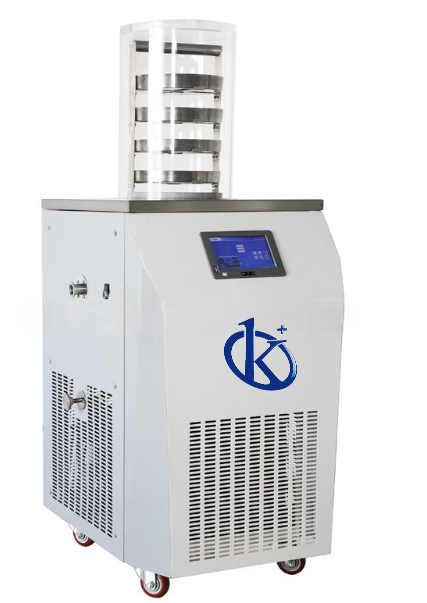
The Role of Vertical Laboratory Freeze Dryers in University Research and Academic Projects
In the realm of university research and academic projects, the utilization of vertical laboratory freeze dryers is pivotal. These sophisticated devices allow researchers to preserve biological samples, pharmaceuticals, and food products efficiently. By converting liquid into vapor without passing through a liquid state, freeze dryers facilitate long-term storage while maintaining the integrity of sensitive samples. This article delves into how these systems can be leveraged in academic settings, comparing popular models and outlining best practices for effective implementation.
Understanding Vertical Laboratory Freeze Dryers
Vertical laboratory freeze dryers are designed specifically for the efficient freeze-drying of various materials, crucial for laboratory settings in universities. The structure and technology allow researchers to effectively lyophilize samples, ensuring the preservation of biochemical properties, which is often essential for research validity.
By selecting the right model, researchers can enhance their productivity and improve the reliability of their results. In this context, understanding the features and capabilities of different vertical freeze dryer models is essential for making informed decisions that align with specific research needs.
Applications in Academic Research
Vertical freeze dryers are particularly beneficial in diverse academic research fields, including biology, pharmacology, and food science. They allow for the preservation of samples that can later be rehydrated without loss of biochemical activity, which is crucial for experiments requiring reproducibility.
For instance, researchers studying enzyme stability can lyophilize enzyme samples, which can then be stored for extended periods without degradation. This application highlights the importance of selecting a freeze dryer that meets the specific requirements of the research project.
Choosing the Right Vertical Laboratory Freeze Dryer
When selecting a vertical laboratory freeze dryer for academic use, several factors should be considered including capacity, temperature range, and ease of use. Models like the YR05198 and YR05199 provide significant versatility and control over the lyophilization process, making them ideal for research settings.
Understanding the unique specifications of each model allows researchers to align their equipment choice with their experimental design and workload requirements.
Comparison of Available Models
| Model | Lyophilization Area (m²) | Water Capture Capacity (kg/24h) | Temperature Range (°C) | Price (USD) |
|---|---|---|---|---|
| YR05198 | 0.18/0.27 | 6 | -40 ~ +60 | 4392.00 |
| YR05199 | 0.09 | 6 | -40 ~ +60 | 4882.00 |
| YR05200 | 0.18/0.27 | 6 | -40 ~ +60 | 4178.00 |
| YR05201 | 0.09 | 6 | -40 ~ +60 | 5061.00 |
| YR05985-1 | 0.7 | 10 | -55 ~ +70 | 16800.00 |
| YR05985-2 | 1.04 | 15 | -55 ~ +70 | 21000.00 |
Optimizing Freeze-Drying Processes for Research
To achieve optimal results, researchers should consider process parameters such as freeze-drying time, temperature settings, and the nature of the samples being processed. Models like YR05200 and YR05201 are equipped with advanced temperature control capabilities, allowing for customization according to specific sample requirements, crucial in academic research.
Moreover, proper vacuum levels are vital for maintaining sample integrity during the drying process. Researchers should regularly monitor and adjust these parameters to maximize efficiency and effectiveness in their freeze-drying processes.
Common Mistakes and How to Avoid Them
One common mistake in using vertical laboratory freeze dryers is overlooking the sample characteristics and their compatibility with the drying process. Researchers often use incorrect temperature settings or fail to account for sample size, leading to poor results.
To avoid these pitfalls, it is crucial to thoroughly understand the specifications of the selected model and to conduct preliminary tests to fine-tune the drying parameters for optimal outcomes.
Frequently Asked Questions
How do vertical laboratory freeze dryers enhance university research capabilities?
Vertical laboratory freeze dryers like the YR05198 significantly enhance university research by preserving biochemical integrity during the freeze-drying process, which is vital for experiments requiring reproducibility in results.
Which is the best freeze dryer model for academic projects with limited budgets?
For academic projects with limited budgets, the YR05200 model offers a balance of affordability and capability, priced at $4178.00, making it suitable for various research applications.
What are the essential features to look for in a vertical freeze dryer for research?
Key features to consider include lyophilization area, water capture capacity, and temperature range. Models like YR05985-2, with a water capture capacity of 15 kg/24h, are designed for intensive research applications.
How can I ensure compliance with research standards using freeze dryers?
To ensure compliance with research standards, select models like the YR05199 that maintain precise control over drying conditions, thereby preserving the integrity of sensitive samples, essential for academic validation.
Which vertical freeze dryer model is best for large scale academic projects?
The YR05985-2 model is ideal for large-scale academic projects, offering a lyophilization area of 1.04 m² and a water capture capacity of up to 15 kg/24h, supporting extensive research needs.
How do vertical freeze dryers improve sample preservation in research?
Vertical freeze dryers improve sample preservation by preventing degradation of biochemical properties during storage. Models such as the YR05198 are designed specifically for maintaining sample integrity in research settings.
What maintenance is required for vertical laboratory freeze dryers used in universities?
Regular maintenance including cleaning vacuum seals, checking temperature calibration, and inspecting vacuum systems is required for models like the YR05199 to ensure optimal performance in university labs.
How do I choose the right capacity for a vertical freeze dryer in research?
Choosing the right capacity depends on your research needs. The YR05201 model is suitable for smaller labs, while larger projects may benefit from the YR05985-2, which offers a higher capacity and efficiency.
If you are looking for a fusion of innovation and quality, you have come to the right place. At Kalstein, we offer you the luxury of exploring our exclusive catalog of laboratory equipment. We manufacture every device to the highest standards of excellence. Our intuitive and seamless online purchasing channels are designed for your convenience, securing the most competitive prices. Hesitate no longer — we bring science to life, it is time to become part of our community.