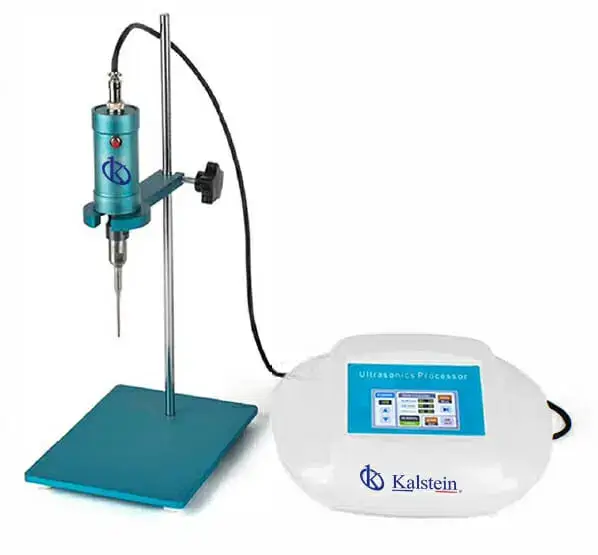
How to Implement Predictive Maintenance and Recommended Calibration for Ultrasonic Homogenizers
In the demanding environment of laboratory operations, ensuring the reliability and efficiency of equipment is crucial. Ultrasonic homogenizers play an essential role in various applications, from emulsification to cell disruption. This article delves into the significance of predictive maintenance and regular calibration practices tailored to ultrasonic homogenizers, focusing on models such as YR05829, YR05830, YR05831, YR05831-op1, YR05831-op2, and YR05832.
Understanding Predictive Maintenance for Ultrasonic Homogenizers
Predictive maintenance involves using data-driven analytics and condition monitoring to predict when maintenance should be performed. This strategy aims to minimize downtime and extend the lifespan of equipment, which is vital for ultrasonic homogenizers that operate in precision-driven environments. By employing sensors and monitoring systems, laboratories can gather data on performance metrics such as ultrasonic power output, frequency stability, and operational hours.
Calibration Standards and Their Importance
Calibration of ultrasonic homogenizers is essential to maintain accuracy and reliability. The recommended calibration intervals can vary, but generally, it is advisable to calibrate after a specified number of operational hours or before significant experimental runs. Regular calibration ensures that the equipment's output aligns with established standards, such as ISO 17025, enhancing data reliability.
Recommended Calibration Intervals for Ultrasonic Homogenizers
The need for calibration is often determined by usage frequency and the critical nature of the applications. For ultrasonic homogenizers, a general recommendation is to schedule calibration every 6 months for routine use. However, for intensive applications, more frequent calibration, perhaps every 3 months, may be necessary. The following table illustrates typical calibration intervals based on usage:
| Usage Frequency | Recommended Calibration Interval | Impact on Accuracy |
|---|---|---|
| Low | Every 6 months | Minimal |
| Medium | Every 4 months | Moderate |
| High | Every 3 months | Significant |
Key Performance Indicators for Predictive Maintenance
When implementing a predictive maintenance program for ultrasonic homogenizers, specific key performance indicators (KPIs) should be monitored. These include Mean Time Between Failures (MTBF), Mean Time to Repair (MTTR), and equipment utilization rates. For instance, monitoring the MTBF helps identify the average operational time between equipment failures, indicating the overall reliability of models such as YR05831 and YR05832.
Common Calibration Techniques for Ultrasonic Homogenizers
Calibration of ultrasonic homogenizers can involve various techniques. One effective method is to utilize calibrated reference standards that replicate known liquid properties. Calibration should include a frequency sweep to ensure the equipment maintains its designated operational frequencies, typically between 19 KHz to 25 KHz for models like YR05829 and YR05830.
Comparison of Available Models
| Model Code | Ultrasonic Power (W) | Frequency (KHz) | Capacity (ml) | Price (USD) |
|---|---|---|---|---|
| YR05829 | 5-150 | 19-25 | 0.1-50 | 659.00 |
| YR05830 | 5-250 | 19-25 | 0.5-100 | 659.00 |
| YR05831 | 5-400 | 19-25 | 0.5-300 | 699.00 |
| YR05831-op1 | 5-400 | 19-25 | 0.5-300 | 149.00 |
| YR05831-op2 | 5-400 | 19-25 | 0.5-300 | 95.00 |
| YR05832 | 650 | 20-25 | 0.2-500 | 1050.00 |
Common Mistakes and How to Avoid Them
One of the most frequent mistakes in maintenance is neglecting the calibration schedule. Laboratories often overlook the importance of adhering to recommended calibration intervals, leading to compromised results and equipment reliability. To avoid this, establish a robust maintenance schedule that includes reminders for both predictive maintenance checks and calibration activities.
Another common error is failing to document maintenance activities properly. Detailed records serve as essential reference points for future calibrations and maintenance, ensuring traceability and compliance with standards like ISO 17025. Utilizing digital maintenance logs can streamline this process.
Frequently Asked Questions
What are the benefits of predictive maintenance for ultrasonic homogenizers?
Predictive maintenance for ultrasonic homogenizers, such as the YR05831, helps reduce unplanned downtime and extends equipment life. By monitoring performance data, laboratories can anticipate failures before they occur, ensuring consistent performance and reducing overall maintenance costs.
How often should I calibrate my ultrasonic homogenizer?
Calibration frequency depends on usage. For moderate usage of models like YR05830, calibration every 4 months is recommended. This ensures the accuracy of the homogenizer's performance and compliance with industry standards.
What is the impact of neglecting calibration on ultrasonic homogenizers?
Neglecting calibration can significantly impact the performance of ultrasonic homogenizers, such as the YR05829, leading to unreliable results. Regular calibration ensures equipment operates within specified parameters, thus maintaining data integrity and compliance with standards.
How does predictive maintenance reduce costs in laboratory operations?
By implementing predictive maintenance for ultrasonic homogenizers, laboratories can minimize unexpected breakdowns and repair costs. For example, the YR05832 can be monitored for performance metrics, reducing overall maintenance expenses and enhancing operational efficiency.
What are the key indicators to monitor for ultrasonic homogenizer maintenance?
Key indicators include ultrasonic power output, operational hours, and frequency stability. Monitoring these metrics for models like YR05831 can help predict potential failures and determine optimal calibration intervals.
Which ultrasonic homogenizer models are best for high-throughput applications?
For high-throughput applications, models such as YR05831 and YR05832 are ideal due to their higher power output and capacity. These models can effectively handle larger volumes, enhancing productivity in laboratory settings.
How can I ensure compliance with ISO standards in my ultrasonic homogenizer usage?
To ensure compliance with ISO standards, laboratories should maintain detailed records of calibration and maintenance activities for models like YR05830. Following recommended calibration schedules and using validated procedures helps meet ISO 17025 requirements.
What technology is used for predictive maintenance in ultrasonic homogenizers?
Data analytics technologies are often employed for predictive maintenance in ultrasonic homogenizers. By integrating sensors that track performance metrics of models like YR05831-op1, laboratories can employ real-time monitoring and predictive analytics.
For more information or to request a quote, please reach out today.
If you are looking for a fusion of innovation and quality, you have come to the right place. At Kalstein, we offer you the luxury of exploring our exclusive catalog of laboratory equipment. We manufacture every device to the highest standards of excellence. Our intuitive and seamless online purchasing channels are designed for your convenience, securing the most competitive prices. Hesitate no longer — we bring science to life, it is time to become part of our community.