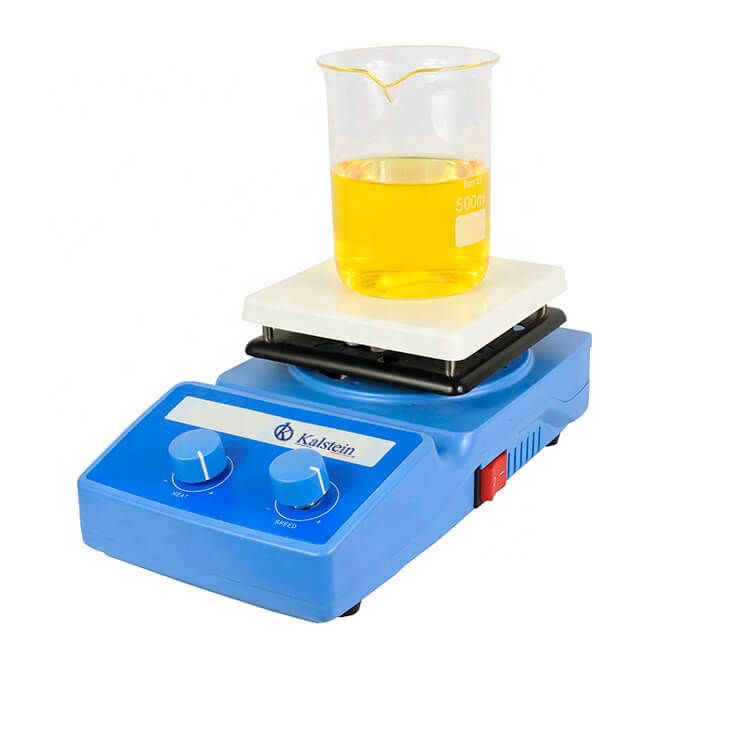
Optimizing Productivity with Analog Ceramic Top Hotplate Stirrers: A Comprehensive Comparison
In laboratory settings, the efficiency of experiments largely depends on the equipment used. Among these, Analog Ceramic Top Hotplate Stirrers play a key role in enhancing productivity and reducing analysis times. This article delves into the various models available in this category, analyzing their features, specifications, and how they contribute to increased efficiency in laboratory processes.
Understanding the Role of Hotplate Stirrers in Laboratory Productivity
Hotplate stirrers are essential tools in laboratories that require heating and mixing of samples. Their effectiveness directly correlates with laboratory throughput and operational efficiency. Analog Ceramic Top Hotplate Stirrers are particularly favored for their reliability, ease of use, and ability to maintain uniform temperatures, which is critical in ensuring the consistency of experimental results.
When optimizing productivity, factors such as heating speed, mixing efficiency, and the ability to operate without constant supervision are paramount. This article will compare several models to highlight their strengths in achieving these objectives.
Comparison of Available Models
| Model Code | Temperature Range (°C) | Plate Size (mm) | Power (W) | Price (USD) | Best For |
|---|---|---|---|---|---|
| YR02933 | Ambient to 325 | 180 x 180 | N/A | 125.00 | Basic Heating Tasks |
| YR02934 | Ambient to 380 | 180 x 180 | N/A | 152.00 | Efficient Small-scale Mixing |
| YR02935 | RT-380 | 230 x 230 | 750 | 190.00 | High-Volume Mixing |
| YR02936 | Ambient to 400 | 280 x 280 | 450 | 265.00 | Versatile Laboratory Applications |
Optimizing Productivity: Key Features to Consider
Temperature Control Efficiency
Temperature control is a pivotal feature in any hotplate stirrer. Models like YR02934 utilize PID (Proportional-Integral-Derivative) control to ensure precise temperature management. This precision minimizes the risk of overheating samples, which can lead to inaccurate results and increased analysis times. The ability to maintain stability in temperature is particularly beneficial in long-duration experiments.
Mixing Capability and Speed
The mixing capability of a hotplate stirrer directly affects the efficiency of laboratory operations. The YR02935 model, for instance, offers a mixing speed range of 100-1800 RPM, which allows for tailored mixing based on viscosity and volume. Faster mixing can significantly reduce the time spent on sample preparation, leading to an overall boost in productivity.
Common Mistakes and How to Avoid Them
In the pursuit of optimizing productivity, laboratories often fall into common pitfalls that can hinder performance. Below are some mistakes and strategies to avoid them:
- Neglecting Regular Maintenance: Regular maintenance checks are crucial to ensure that the hotplate stirrers operate efficiently. Create a maintenance schedule based on usage frequency.
- Overloading the Equipment: Exceeding the specified capacity of the stirrer can lead to equipment failure and increased analysis times. Always adhere to manufacturer guidelines.
- Inefficient Temperature Settings: Using incorrect temperature settings for specific experiments can lead to subpar results. Familiarize yourself with the optimal temperature ranges for various applications.
Frequently Asked Questions
How does the YR02934 model enhance productivity in laboratory settings?
The YR02934 model enhances productivity by offering precise PID temperature control, ensuring consistent results for experiments requiring stable heating, which is vital for time-sensitive processes.
What are the energy consumption benefits of using Analog Ceramic top hotplate stirrers?
Analog Ceramic top hotplate stirrers, like the YR02936, are designed to operate efficiently, reducing energy consumption compared to traditional heating methods, which leads to lower operational costs.
Which model is best for high-volume mixing applications in laboratories?
The YR02935 model is ideal for high-volume mixing applications due to its robust mixing speed of up to 1800 RPM, which significantly reduces preparation time for large sample batches.
How can I ensure temperature accuracy with hotplate stirrers?
To ensure temperature accuracy, utilize models such as the YR02934, which feature advanced PID control, allowing for precise temperature adjustments and stable performance throughout experiments.
What maintenance practices should I follow for hotplate stirrers?
Regularly inspect the hotplate stirrers for wear and tear, clean the ceramic surfaces after each use, and calibrate the temperature settings to maintain accuracy, ensuring longevity and optimal performance.
How do Analog Ceramic top hotplate stirrers compare with motorized stirrers in terms of efficiency?
Analog Ceramic top hotplate stirrers, such as the YR02936, are typically more efficient due to their lack of moving parts that can wear out, providing quieter operation and lower maintenance needs compared to motorized stirrers.
What is the average lifespan of an Analog Ceramic top hotplate stirrer?
The average lifespan of an Analog Ceramic top hotplate stirrer can exceed 10 years with proper maintenance, making models like the YR02933 a valuable investment for long-term laboratory use.
How can I integrate hotplate stirrers into a laboratory automation system?
To integrate hotplate stirrers into a laboratory automation system, ensure compatibility with existing systems and utilize models like the YR02934, which offer straightforward connectivity options for seamless integration.
If you are looking for a fusion of innovation and quality, you have come to the right place. At Kalstein, we offer you the luxury of exploring our exclusive catalog of laboratory equipment. We manufacture every device to the highest standards of excellence. Our intuitive and seamless online purchasing channels are designed for your convenience, securing the most competitive prices. Hesitate no longer — we bring science to life, it is time to become part of our community.