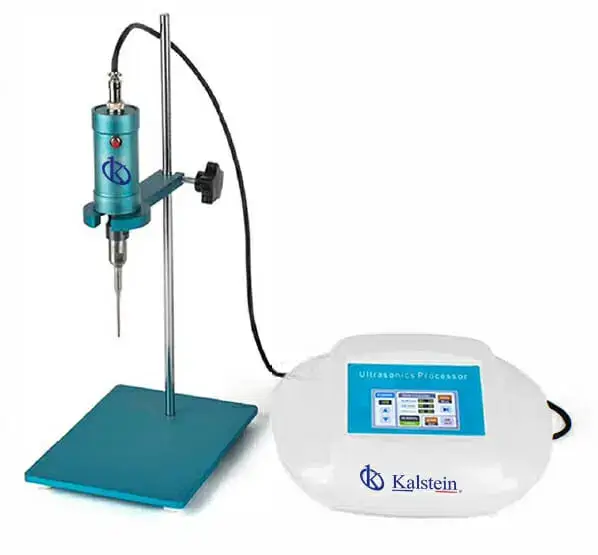
Achieving ISO/IEC Compliance with Ultrasonic Homogenizers in Laboratories
In the realm of laboratory operations, adherence to ISO/IEC standards is paramount for ensuring quality, reliability, and reproducibility of results. Ultrasonic homogenizers, known for their efficiency in sample processing, play a crucial role in helping laboratories meet these regulatory requirements. This article delves into the specifications, applications, and compliance features of various ultrasonic homogenizers, providing laboratory professionals with insights on how to make informed decisions.
The Importance of ISO/IEC Compliance in Laboratory Settings
ISO (International Organization for Standardization) and IEC (International Electrotechnical Commission) standards are critical in laboratory environments, ensuring that facilities operate with a high degree of quality control. Compliance with these standards not only fosters trust in laboratory results but also enhances operational efficiency. Laboratories must embrace these standards to meet the demands of accreditation bodies and stakeholders, laying the groundwork for systematic improvement and accountability.
Key ISO/IEC Standards Relevant to Ultrasonic Homogenizers
Several ISO/IEC standards are particularly relevant to ultrasonic homogenizers, including ISO 17025 and IEC 61010. ISO 17025 outlines the general requirements for the competence of testing and calibration laboratories, while IEC 61010 covers the safety requirements for electrical equipment used in measurement, control, and laboratory use. Understanding these standards is crucial for laboratories aiming for compliance and operational excellence.
How Ultrasonic Homogenizers Meet ISO/IEC Standards
Ultrasonic homogenizers, such as the YR05829, YR05830, YR05831, and others, are designed with features that align with ISO/IEC compliance. These instruments provide precise control over processing parameters, including amplitude, frequency, and temperature, which are essential for reproducible results. They also facilitate thorough documentation of operational protocols, crucial for maintaining compliance with ISO 17025.
Comparison of Available Models
| Model | ISO/IEC Clauses Covered | Traceability Features | Best For |
|---|---|---|---|
| YR05829 | ISO 17025 | Digital record keeping | General laboratory use |
| YR05830 | ISO 17025 | Automated logging | High-throughput applications |
| YR05831 | ISO 17025 | Integrated data management | Research laboratories |
| YR05831-op1 | ISO 17025 | Real-time monitoring | Field applications |
| YR05831-op2 | ISO 17025 | Data export capabilities | Cost-efficient setups |
| YR05832 | IEC 61010 | Safety certification | Advanced research |
Common Mistakes and How to Avoid Them
Laboratories often face challenges in achieving compliance with ISO/IEC standards due to oversight in documentation and calibration processes. A common mistake is failing to maintain detailed records of equipment usage and maintenance, which is essential for compliance with ISO 17025. Additionally, neglecting regular calibration of ultrasonic homogenizers can lead to deviations in performance, ultimately affecting the validity of results. Implementing a structured approach to documentation and calibration can mitigate these risks.
Exploring Applications of Ultrasonic Homogenizers in Compliance
The versatility of ultrasonic homogenizers allows them to be used in various laboratory applications, including emulsification, cell disruption, and extraction. For instance, the YR05830 is particularly effective for high-throughput applications requiring precise emulsification while simultaneously meeting compliance standards. Each application has its specific requirements, and understanding these becomes crucial for maintaining compliance and achieving optimized results.
Cost-Benefit Analysis of Using Ultrasonic Homogenizers
When considering the investment in ultrasonic homogenizers, a detailed cost-benefit analysis is essential. An initial evaluation of capital expenditures (CAPEX) versus operational expenses (OPEX) will help laboratories justify their investment. For instance, the YR05831 has a price point of $699.00, but its efficiency in processing can lead to reduced costs per test over time, enhancing the return on investment (ROI).
FAQs
What ISO standards should ultrasonic homogenizers comply with?
ISO 17025 is essential for ultrasonic homogenizers, such as the YR05829, as it ensures the competence of testing and calibration laboratories. Compliance with this standard guarantees that laboratory results are reliable and valid.
How do ultrasonic homogenizers assist in maintaining laboratory compliance?
Ultrasonic homogenizers like the YR05830 provide automated logging and detailed documentation of processes, which is crucial for maintaining compliance with standards like ISO 17025 and IEC 61010.
What is the average cost of an ISO 17025 compliant ultrasonic homogenizer?
The average cost for ISO 17025 compliant ultrasonic homogenizers, such as the YR05831, ranges from $659.00 to $699.00, depending on features and specifications.
How often should ultrasonic homogenizers be calibrated for compliance?
Calibration of ultrasonic homogenizers should ideally be done every 6 to 12 months to ensure compliance with ISO 17025, maintaining accuracy and reliability in laboratory results.
What safety standards are applicable to ultrasonic homogenizers?
IEC 61010 provides safety standards for ultrasonic homogenizers like the YR05832, ensuring that equipment used in laboratories meets required safety requirements for electrical devices.
Which ultrasonic homogenizer is best for high-throughput applications?
The YR05830 is ideal for high-throughput applications due to its automated features and capabilities that facilitate compliance with ISO/IEC standards efficiently.
How do I ensure traceability when using ultrasonic homogenizers?
Models like the YR05831 offer integrated data management systems that enhance traceability by maintaining records of all processes, crucial for ISO 17025 compliance.
What are the maintenance requirements for ISO compliant ultrasonic homogenizers?
Regular maintenance, including calibration and operational checks, is necessary for ISO compliant ultrasonic homogenizers like the YR05829 to ensure they meet performance and compliance standards.
If you are looking for a fusion of innovation and quality, you have come to the right place. At Kalstein, we offer you the luxury of exploring our exclusive catalog of laboratory equipment. We manufacture every device to the highest standards of excellence. Our intuitive and seamless online purchasing channels are designed for your convenience, securing the most competitive prices. Hesitate no longer — we bring science to life, it is time to become part of our community.