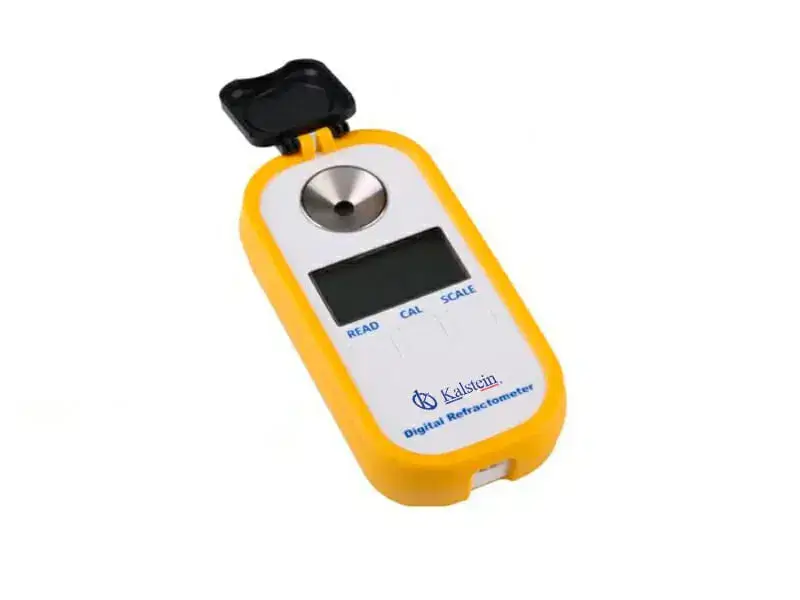
Comparative Analysis of Digital BRIX Refractometers: A Focus on Market Alternatives
The Digital BRIX Refractometer family plays a crucial role in various applications, especially in measuring the concentration of soluble solids in aqueous solutions. With numerous models available, it is essential to understand how different Digital BRIX Refractometers stack up against one another and against alternative technologies available in the market. This article will delve into a comparative analysis of prominent Digital BRIX Refractometers based on performance, specifications, and their applications.
Understanding Digital BRIX Refractometers
Digital BRIX Refractometers are designed to measure the sugar content in liquids, which is crucial in industries like food and beverage, pharmaceuticals, and research laboratories. Their precision and ease of use make them essential tools for obtaining accurate measurements of the refractive index and calculating the concentration of dissolved solids. In this section, we'll examine the operational features that define their performance compared to alternative measurement devices such as hydrometers and traditional refractometers.
Comparison of Available Models
| Model Code | Measurement Range | Minimum Division | Accuracy | Temperature Compensation | Best For |
|---|---|---|---|---|---|
| YR05944 | Brix: 0.0-50.0% | 0.10% | ±0.2% | Yes (0-40°C) | Fruit juice, syrups |
| YR05945 | Brix: 0.0-90.0% | 0.10% | ±0.2% | Yes (0-40°C) | Beverages, desserts |
| YR05946 | Refractive Index: 1.3330-1.5177 | 0.0001 | ±0.0003 | Yes (0-40°C) | General laboratory use |
| YR05947 | Dextran: 0.0-10.6% | 0.10% | ±0.2% | Yes (0-40°C) | Biochemical applications |
| YR05948 | Fructose: 0.0-68.9% | 0.10% | ±0.2% | Yes (0-40°C) | Food industry, research |
| YR05949 | Glucose: 0.0-59.9% | 0.10% | ±0.2% | Yes (0-40°C) | Diet and nutrition |
Comparative Performance Against Alternative Technologies
When it comes to measuring sugar concentrations, Digital BRIX Refractometers offer distinct advantages over traditional methods such as hydrometers or analog refractometers. While hydrometers can provide bulk measurements, they often lack the precision required for high-stakes applications. Digital BRIX Refractometers, such as the YR05944 and YR05945, not only deliver accurate results but also integrate automatic temperature compensation (ATC), significantly enhancing measurement reliability in fluctuating temperatures.
Advantages of Digital BRIX Refractometers
The primary advantages of Digital BRIX Refractometers include their ease of use, portability, and precision. Models like YR05946 and YR05948 support a wide range of applications, from basic sugar content measurement to more complex biochemical analyses. Their digital interface allows for quick readings, reducing the potential for human error and increasing throughput in laboratory settings.
Common Mistakes and How to Avoid Them
In the utilization of Digital BRIX Refractometers, there are several common mistakes that users often encounter. One of the most frequent issues is not calibrating the device before use, which can lead to inaccurate readings. It is crucial to regularly calibrate these devices using standard solutions to ensure reliability. Furthermore, not accounting for temperature variations can significantly affect measurements. Utilizing models with built-in ATC, like the YR05944, can help mitigate this issue.
Frequently Asked Questions
How accurate are Digital BRIX Refractometers compared to traditional hydrometers?
Digital BRIX Refractometers, such as the YR05945, typically offer greater accuracy with an error margin of ±0.2%, while traditional hydrometers may vary significantly due to temperature effects and manual reading errors.
What applications are best suited for the Digital BRIX Refractometer YR05948?
The YR05948 is ideal for analyzing fructose levels in food products, making it particularly valuable in the food industry for quality control and formulation purposes.
How does temperature affect the measurements of a Digital BRIX Refractometer?
Temperature can significantly impact refractive index measurements. Models like the YR05944 feature automatic temperature compensation (ATC), which corrects readings for temperatures between 0-40°C, ensuring accuracy.
Can Digital BRIX Refractometers measure other sugar types besides sucrose?
Yes, models such as YR05947 are specifically designed to measure dextran levels, while others like YR05949 can measure glucose, making them versatile tools in laboratories.
What is the maintenance routine for a Digital BRIX Refractometer?
Regular calibration, cleaning the optical surfaces, and ensuring that the device is stored properly are essential for the maintenance of models like the YR05946, which enhances longevity and performance.
How do I choose the right Digital BRIX Refractometer for my lab?
Consider factors such as measurement range, required accuracy, and specific applications. For instance, if measuring high sugar concentrations, the YR05945 with a 0.0-90.0% range is suitable.
Conclusion
In conclusion, selecting the appropriate Digital BRIX Refractometer is crucial for obtaining accurate and reliable measurements in various applications. By understanding the features and capabilities of each model, such as the YR05944 and YR05945, laboratory professionals can make informed decisions that enhance their operations.
If you are looking for a fusion of innovation and quality, you have come to the right place. At Kalstein, we offer you the luxury of exploring our exclusive catalog of laboratory equipment. We manufacture every device to the highest standards of excellence. Our intuitive and seamless online purchasing channels are designed for your convenience, securing the most competitive prices. Hesitate no longer — we bring science to life, it is time to become part of our community.